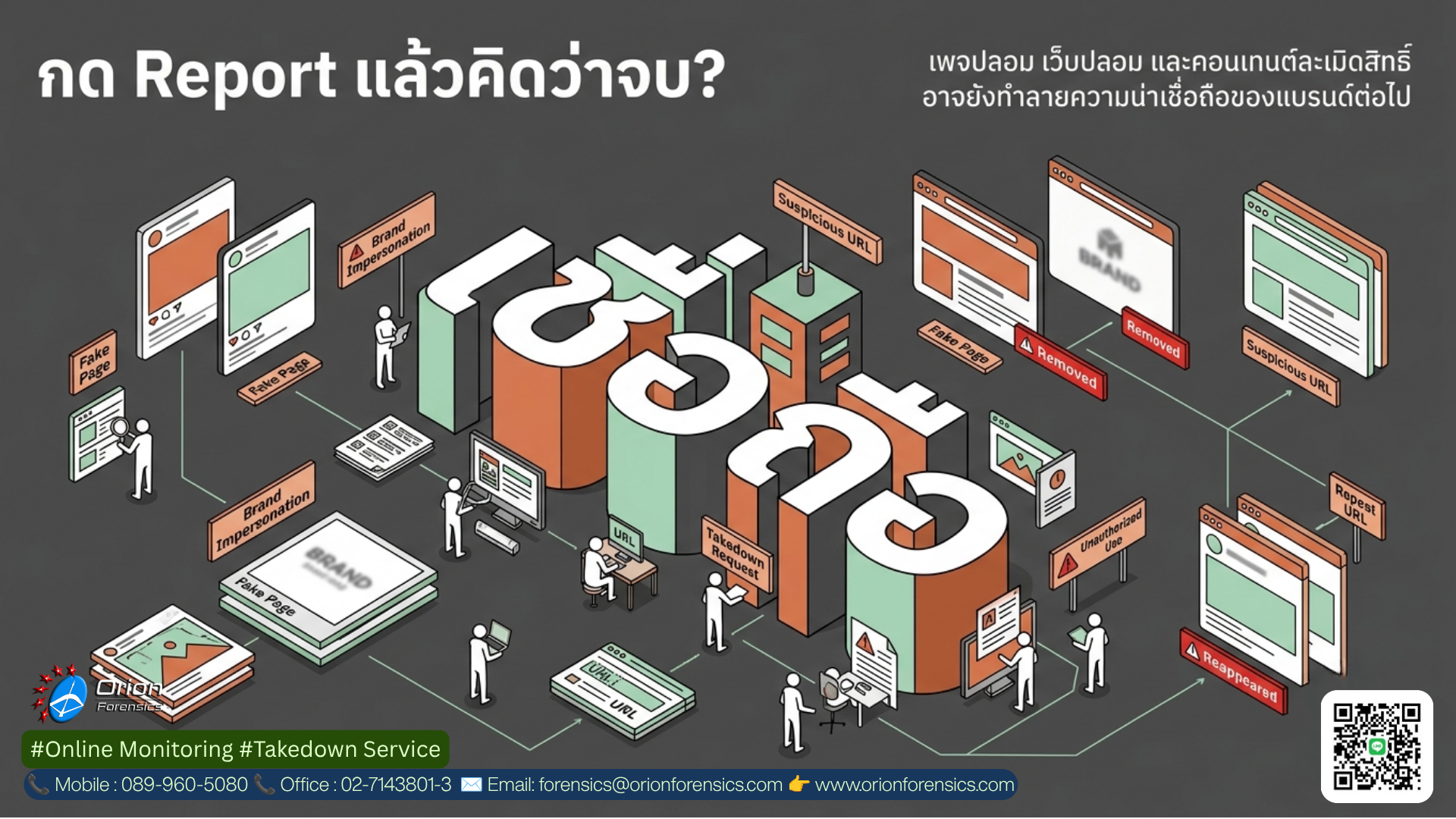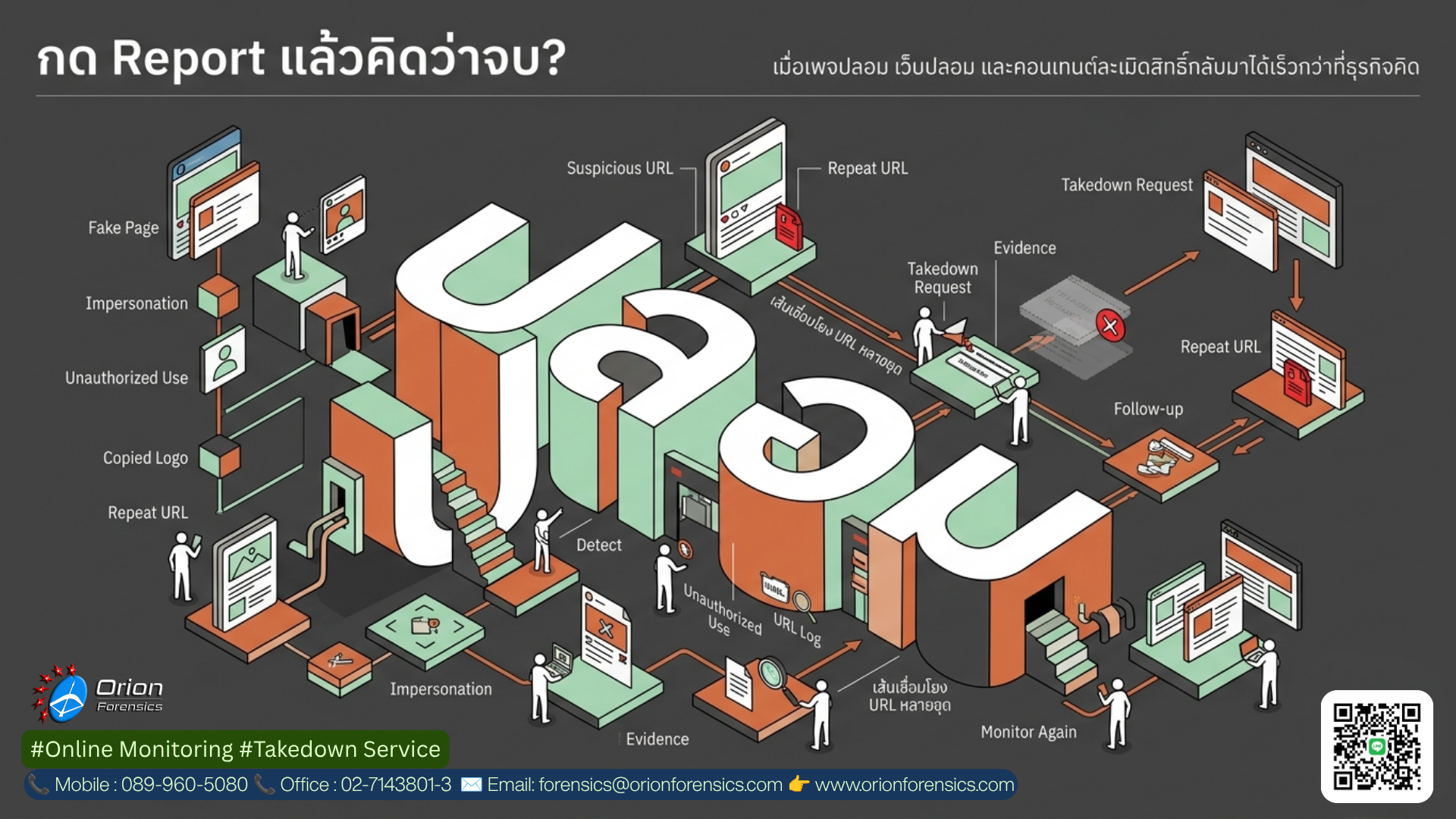
Many organizations still misunderstand the problem. When they find a fake page, fake website, or content using their brand without authorization, they assume that pressing “Report” on the platform is the end of the issue.
In reality, reporting may only be the beginning.
News reports in Thailand have stated that Thai police and Meta have expanded their cooperation to tackle online scam networks, moving beyond online gambling pages to other forms of scams such as investment fraud and fake job schemes, with faster detection and takedown measures.
The key point is that these problems do not happen once and simply disappear. Bad actors can quickly create new pages, change account names, move to new URLs, or shift to other platforms.
The Problem Is Not Just “Fake Pages” — It Is Brand Trust
For businesses, fake pages and fake websites are not merely technical issues. They are risks to customer trust, corporate reputation, trademarks, and brand image.
Sources on social media takedown explain that removing content from social media may involve several types of abuse, such as
- brand impersonation accounts
- counterfeit promotions
- unauthorized use of trademarks
- copyright infringement, scam ads, fake giveaway campaigns, and phishing links
Meta also provides tools for brands to search for and report issues involving counterfeit content, trademark infringement, copyright infringement, scams, and impersonation across Facebook and Instagram.
On the website side, reports on website impersonation also point out that fake websites may use logos, product images, brand colors, company descriptions, or contact details that resemble the real business in order to mislead customers.
Why One Report Is Not Enough
Reporting content to a platform is a necessary step, but it should not be treated as the entire process. Organizations still need to answer several important questions, such as:
- Has the content actually been removed?
- Has the same page or website reappeared under a new name or URL?
- Is there enough evidence for further action?
- Have customers, partners, or the public already been affected?
- Is the brand being reused on other platforms?
Without evidence collection and continuous follow-up, an organization may only see that “one page has been removed” while missing the bigger picture: brand damage may still be continuing elsewhere.