


Cryptocurrency Investigations and Tools
If you believe you may have been a victim of a cryptocurrency scam and need to gather evidence to support a police complaint, Orion Investigations may be able to help.
A cryptocurrency blockchain is a decentralized public digital ledger that exists across a network which contains details of cryptocurrency transactions.
In order to conduct investigations, Orion’s Director of Computer Forensics Services Andrew Smith has developed Blockchain Detective, an investigation tool that simplifies the downloading of cryptocurrency transactions. It automatically generates a visual representation of the transactions (one node per unique address) making it easy to follow the flow of cryptocurrency from one address to the next and automatically identifies exchange addresses.
If you have become a victim of a crypto scam, contact Orion to see how we can assist.
Read full article ==> Cryptocurrency Investigations
Email : forensics@orionforensics.com
Line ID : orionforensics
Mobile Phone : +66(0)89-960-5080
Responding to a RANSOMWARE ATTACK
Responding to a RANSOMWARE ATTACK
When a company becomes a victim of a ransomware attack they will often contact Orion to ask if we can recover their encrypted data. In almost every case the answer is going to be no as we will not have access to a recovery key to decrypt the data. Therefore, it is vital that the company maintains up to date backups of their data.
The number of ransomware attacks continue to rise year on year. According to the Verizon 2022 Data Breach Investigation Report there was a 13% increase in ransomware attacks and ransomware was involved in 25% of all breaches.
One of the trends now employed by the attackers is the double extortion method. The attackers gain access to the network and steal the confidential data. They will then encrypt the data on the network and demand a ransom to be paid to decrypt the data. If the victim has the data backed up and refuses to pay the ransom, the attackers will then threaten to release the data online.
When a company falls victim to a ransomware attack the natural response is to wipe the infected machine and restore the data in order to get up and running again as quickly as possible. As a result, attackers will often use ransomware as a way to destroy any evidence of a data breach after they have extracted the data from the network.
It is therefore important for the company to conduct a thorough investigation even if the encrypted data cannot be recovered.
The purpose of the investigation is to preserve potential evidence in order to:
- Identify how the system came to be infected with ransomware
- Identify if any confidential data has been extracted from the system
- Provide answers to the regulatory authorities and show you have taken reasonable steps to prevent a repeat
- Preserve the data in case decryption keys are released at a later date
If you become a victim of a ransomware attack, how should you respond?
- Do not shut down the infected devices
- Disconnect the infected devices from network
- Preserve logs such as Firewall, VPN, anti-virus logs or any other logs which can be saved
- Document all information pertaining to the ransomware attack
- Photo or copy of the ransom demand note/splash screen
- Ransomware variant name if known
- The file extension of encrypted files
- The date and time of the attack
- The file naming scheme for the ransom note/readme file left by attacker
- Any email addresses or URL or other method provided by the attacker for communications
- Required payment method/bitcoin addresses provided by the attacker
- Ransom amount demanded if known
What information will the investigators need to know from you?
- Number of devices affected
- Type of devices, make, model, size of hard drive
- What OS is on the devices
- Is there encryption on devices and If so what encryption and can IT provide a recovery key?
- Location of devices
- Timeline of events
- Details of ransomware
It is important to respond quickly and get the investigators onsite as soon as possible so that they can begin the process of preserving potential evidence from the infected devices. This will include not only the data from the hard drives and logs but also volatile data such as RAM memory which can provide a wealth of information such as network connections, open ports and destination IP addresses.
We would therefore recommend that you do not wait until you become a victim of a ransomware attack before deciding which investigation company you wish to work with. Do your research, due diligence and complete the vendor onboarding process before an attack occurs. This will ensure a quick response and prevent the loss of any potential evidence.
The Analysis Process Infographic
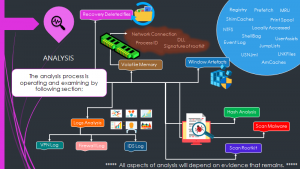
The Article provided by – Andrew Smith – Director of Computer Forensics Services
Email : forensics@orionforensics.com
Line ID : orionforensics
Mobile Phone : +66(0)89-960-5080
Download Article => RESPOND TO A RANSOMWARE ATTACK
vc_column_text]

[Hands-on Workshop] Forensic Techniques for Auditors (1 DAY)
🔍 Is Your Organization Ready to Manage Software Copyright Risks?
If you have questions about
- Using software legally within your organization
- Auditing and identifying unauthorized software
- Evidence examination in software copyright infringement cases
- Responding when your organization receives a software copyright infringement notice
- How to collect and preserve digital evidence for use in legal proceedings
Key Point:
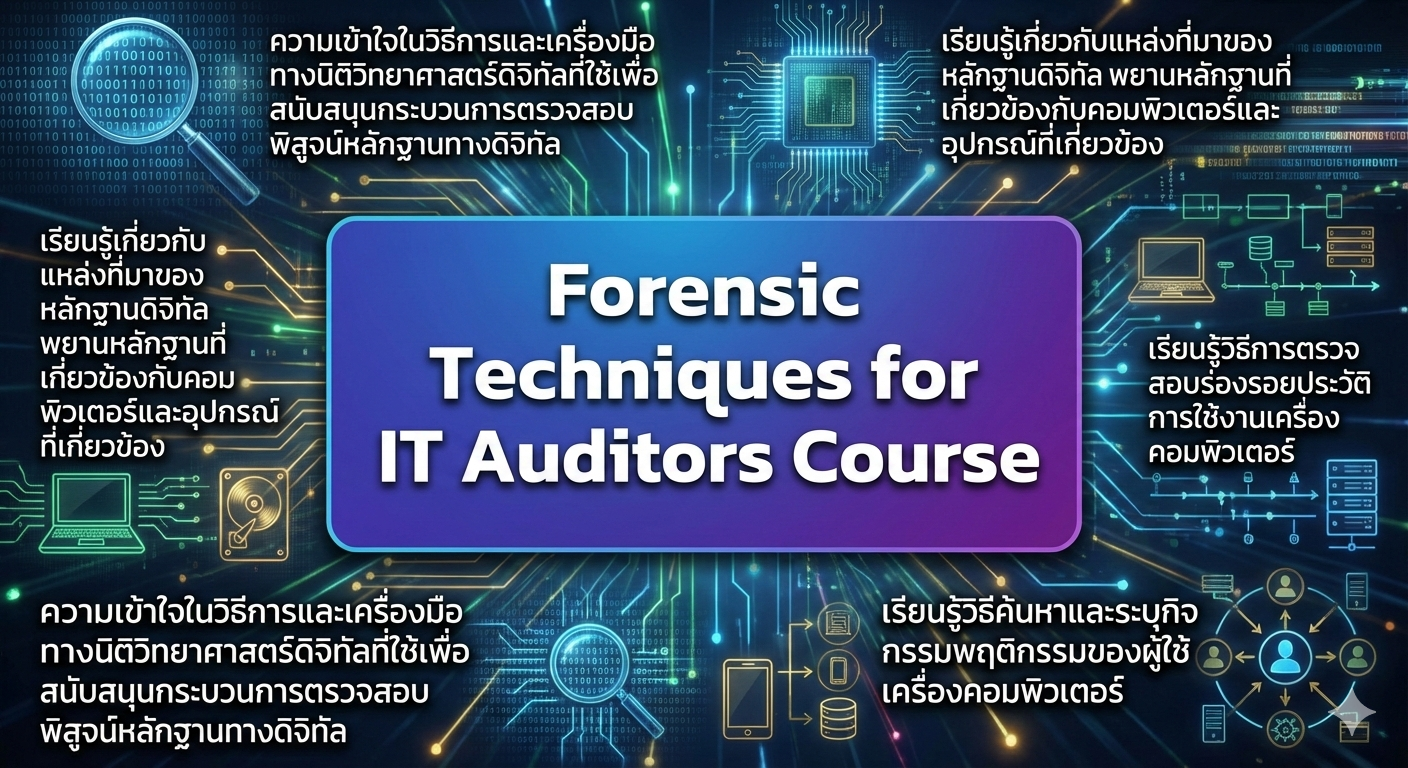
A 1-day training course for IT Auditors who want to learn how to apply forensic techniques (Digital Forensics) to enhance existing audit processes. This course includes extensive practical exercises designed to demonstrate the learning objectives.
What you will learn in this course:
- Participants will learn basic forensic techniques for acquiring and preserving data using forensic methods, as well as how to handle electronic evidence
- Participants will learn how to identify installed software, programs executed on a system, how to extract historical information from the file system, and how to identify hidden user activities
Objectives:
- Understand digital forensic methods and tools used to support digital evidence examination processes
- Learn about sources of digital evidence, computer-related evidence, and related devices
- Learn how to examine traces of computer usage history
- Learn how to search for and identify user activities and behavior on a computer
Course Level:
This course is suitable for auditors who want to learn how to apply basic forensic techniques to enhance existing audit processes. No prior experience is required.
What Participants Will Gain 💡
- Understand the principles of Digital Forensics and digital evidence examination
- Learn the legal considerations related to electronic evidence
- Be able to examine software installed and previously executed on a computer
- Understand how to preserve evidence in its original condition so that it can be used in court, including how to handle electronic evidence, preserve it, and perform forensic data extraction
- Become familiar with tools used for forensic evidence acquisition (Forensic Acquisition Tools)
- Understand basic traces created by users by analyzing files or historical records generated by the operating system, including analysis of program usage through Windows Registry, Event Logs, and various artifacts
- Be able to examine USB storage connections and user activities
- Enhance investigation and analysis skills for incidents related to software copyright infringement
Who Should Attend: IT Auditor
- No prior Computer Forensics background is required
Corporate Training:
- In-House Training only
- Fees are charged on a daily rate basis
- Recommended number of participants: 5–10 persons (for larger groups, please contact Sales directly)
————————
Training Date and Time:

 1-day course, 9:00 AM – 4:00 PM Conducted at the client’s organization only (In-House Training only )
Course Content
- Introduction
- Define Digital Forensics
- Legal Consideration
- Evidence Handling & Chain of Custody and Chain of Custody
- How Courts Assess the Integrity of Digital Evidence
- Good Practice Guidelines for Digital Evidence
- The Four Principles of Computer Based Evidence
- Forensic Acquisitions
- Forensic Acquisition Tools
- Windows Registry
- Identifying Installed Software
- Volume Shadow Copies
- Identifying Executed Programs
- Link File Analysis
- USB Forensics
- Searching the Registry
- Event Logs
 Interested in arranging In-House Training
 :

Cancellation Policy
- Payment is due upon registration
- Delegates who cancel after registration, or who don’t attend, are liable to pay the full course fee and no refunds can be given
- We reserve the right to postpone or cancel a training course at any time.
- If a training course is cancelled by us, we will inform all registered delegates on the course as soon as possible. Upon the cancellation of a course, we will offer to each delegate a full refund for the cost of the course or alternative dates for the course.
- We will not be held liable for any expenses, either direct or indirect, or for loss of time, earnings or business, incurred as a result of a postponed or cancelled course.


Mobile: 089-960-5080
Office: 02-714-3801-3 ext. Hi-Tech Team
Fax: 02-714-3804
Email: 



Training Atmosphere Photos
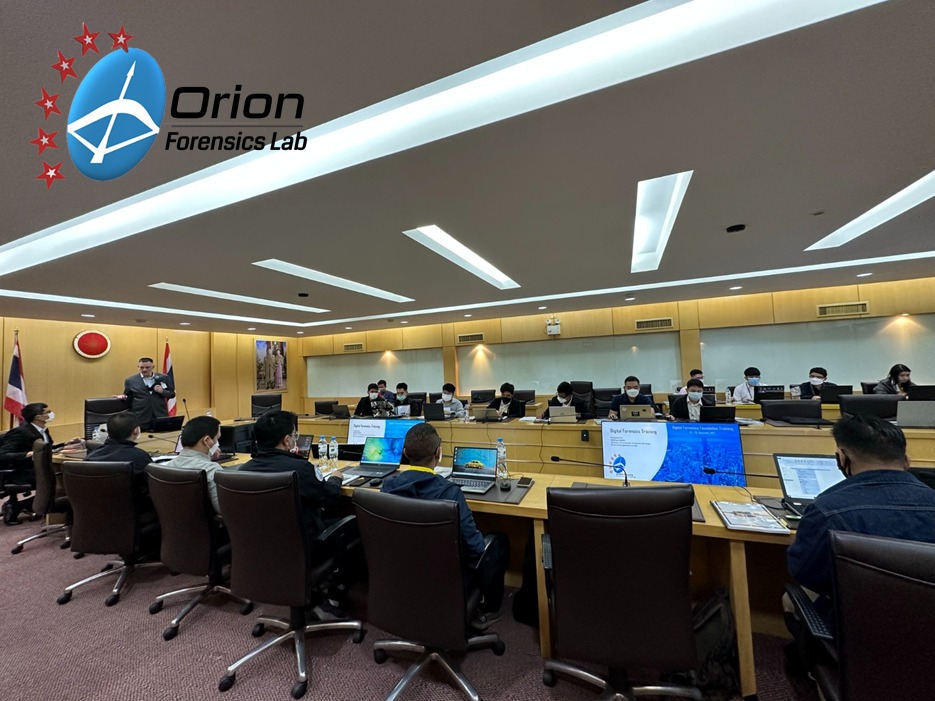
Hands-on Workshop |Digital Forensics Foundation Course 4 Days Organized by Tech Direct Co., Ltd.
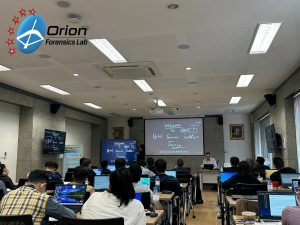
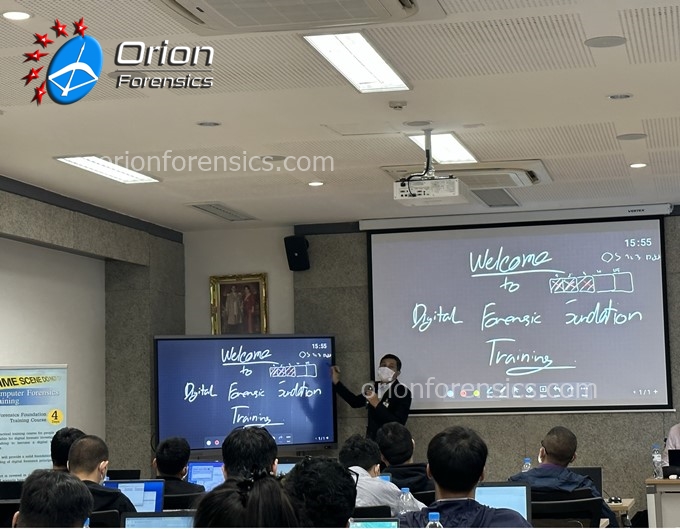
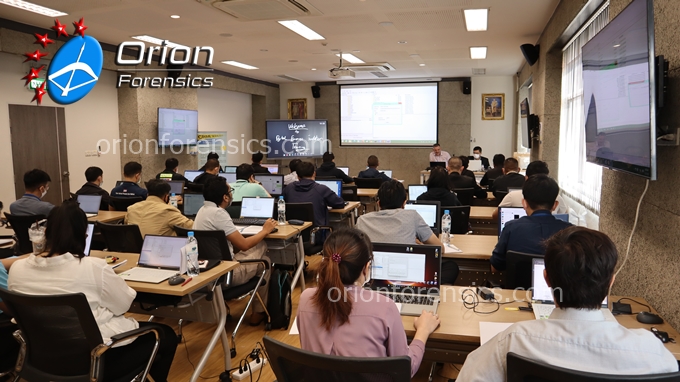
Orion Forensics has organized training course Hands-on Workshop Digital Forensics Foundation Training Course – 4 DAYS on 20th – 23rd December 2022
Tech Direct Co., Ltd. organized the Hands-on Workshop Digital Forensics Foundation Training Course – 4 DAYS on 20th – 23rd December 2022.
A 4-day practical training course for National Intelligence Agency Thailand and police who are responsible for digital forensic investigations.
- The course is aimed for people wishing to become digital forensic investigators or wishing to update their forensic skills.
- The course is designed by digital forensic experts with many years’ experiences both domestically and internationally.
- The training provides a solid foundation in forensic principles and techniques reinforced by practical hands-on exercises using a wide range of free and open-source forensic tools.
The In-House \ On-Site Training available -please contact Digital Forensics Team directly at forensics@orionforensics.com


เบอร์มือถือ : 089-960-5080
เบอร์บริษัท : 02-714-3801-3 ต่อ Hi-Tech Team
โทรสาร : 02-714-3804
อีเมล :
Orion Forensics Investigations Participated in Cyber Defense Initiative Conference (CDIC) 2022
On November 9-10, 2022, Orion Forensics Investigations Participated in the Cyber Defense Initiative Conference CDIC 2022 at the BITEC Exhibition and Convention Center.
CDIC is the largest cybersecurity conference and presentation in Thailand.
There were many government and private sectors participating in the meeting.


Organizing this event The presentation under the theme
“Optimizing Security of Things and Digital Supply Chain Risk”
The event is important in enhancing security potential in various areas such as;
- The Importance of empowering cybersecurity for connected IoT devices
- Risk management in the digital information
- Blockchain, AI-powered, Quantum technology advancements are applied both positively in defense and negatively in attack.
- Major changes to the new version of ISO/IEC 27002 include the “Information Security, Cybersecurity & Privacy Protection” controls for ISO/IEC 27001 (ISMS) certification organizations to know when implementing them.
- Promulgation of law Cyber Security Act and Personal Data Protection Act, Etc.

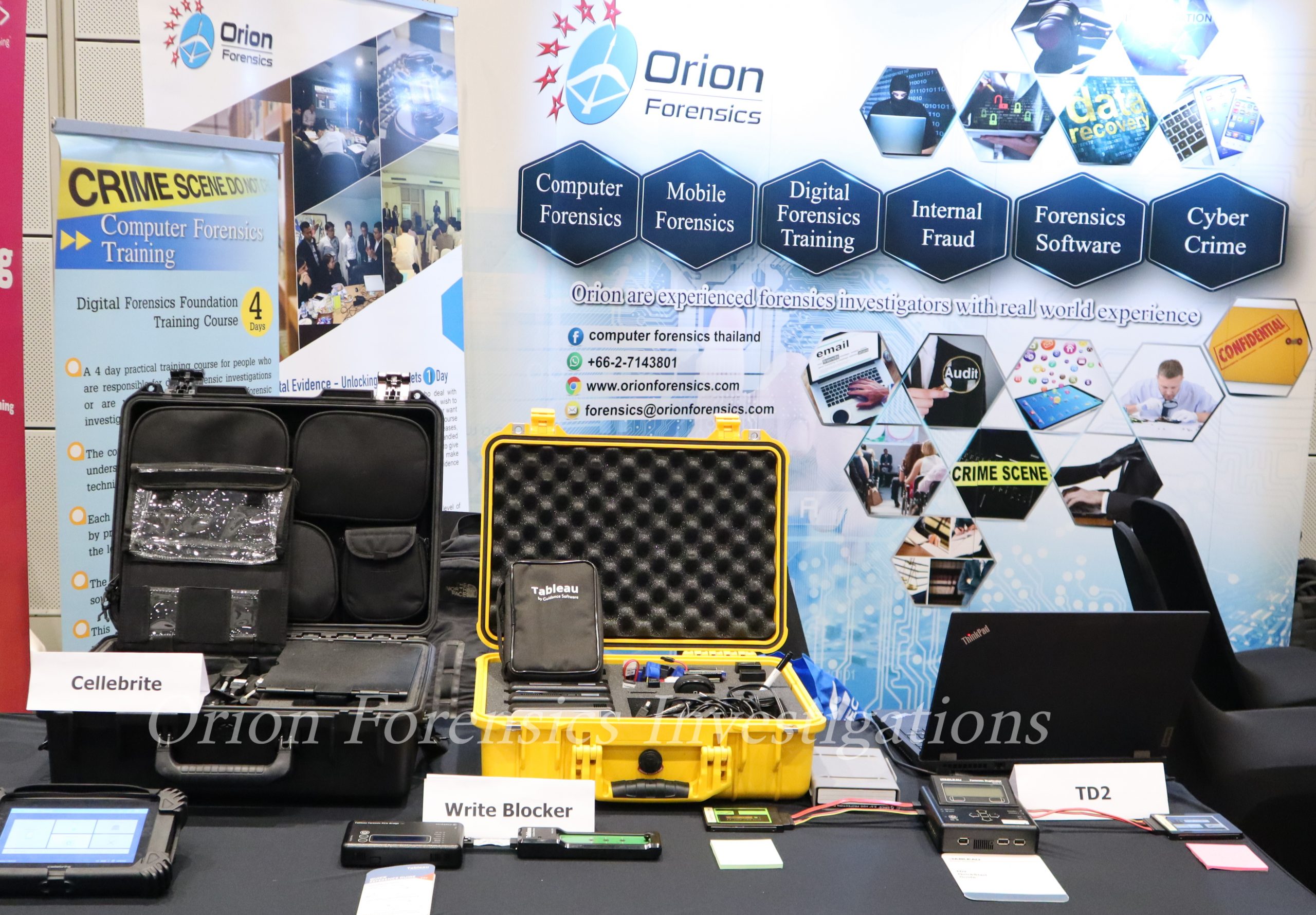
Over two days, Orion Forensics Investigations participated in the event as set up booth, give away prizes to attendees and discuss Digital Forensics Services and Digital Forensics Training Courses, as well as build relationships with other cybersecurity leaders in attendance.
Although, Orion Forensics Investigations has brought and presented sample of equipment in work – related in Digital Forensics, both in terms of software and hardware for study and experiment purposely.

Read More

Hands-on Workshop |Digital Forensics Foundation Course 4 Days to GrowPro Consulting & Services Co.,Ltd.
Orion Forensics LAB has organized training course On-Site| hands-on Workshop Digital Forensics Foundation Training Course (4 DAYS) for GrowPro Consulting & Services Co.,Ltd. on 6th – 9th September 2022
A 4 day practical training course for people who are responsible for digital forensic investigations or are wishing to become a digital forensic investigator. The course will provide a solid foundation in the understanding of digital forensics principles and techniques. Each subject is covered in depth and supported by practical scenario based exercises to reinforce the learning points.
As required from expertise, Orion Forensics lab had adapted the curriculum to meet the professional workload of Cloud data collection, Malware Analysis and the Volatility Framework to analyze RAM Memory.
Hands-on Workshop Digital Forensics Foundation Training Course (4 DAYS) Digital Forensics Foundation Training Course 4 Days

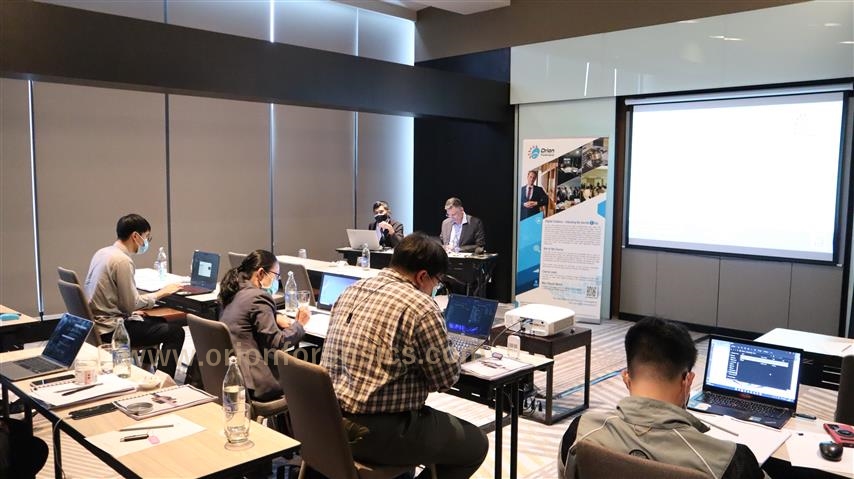

In-House \ On-Site Training available -please contact sales directly at forensics@orionforensics.com
เบอร์มือถือ : 089-960-5080
เบอร์บริษัท : 02-714-3801-3 ต่อ Hi-Tech Team
โทรสาร : 02-714-3804
อีเมล :
][/vc_row]</p>
Read MoreOffences according to the 2007 Computer Crime Act , Judgement of the Supreme Court 2600/2563
Offences according to the 2007 Computer Crime Act section 3 and 7, Judgement of the Supreme Court 2600/2563”A case study of an ex-employee who illegally accessed their company email account after have resigned from the company
Read More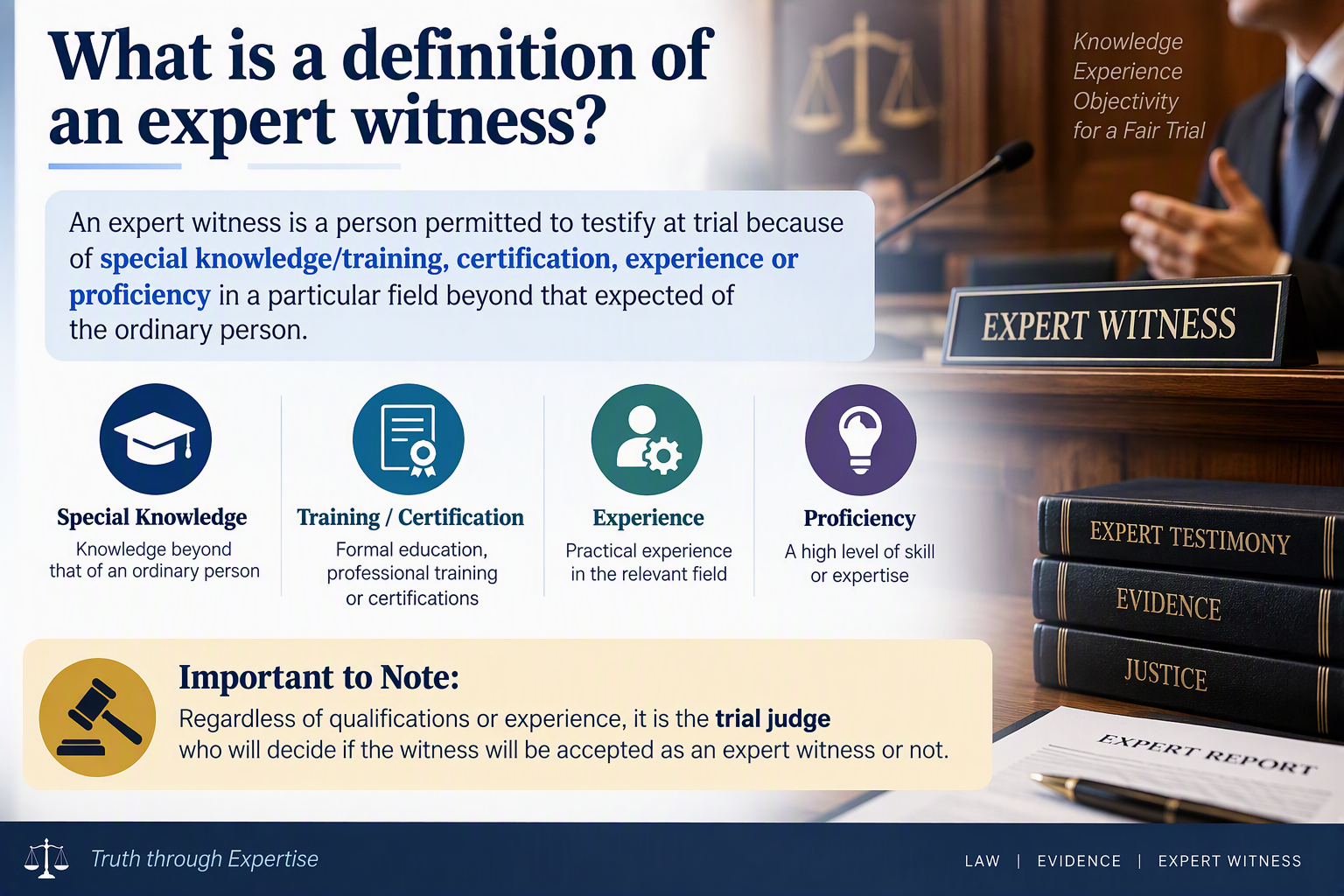
EXPERT WITNESSES – THEIR ROLE & RESPONSIBILITIES
With the Johnny Depp vs Amber Heard trial currently underway and being broadcast live around the world, I thought now would be an appropriate time to discuss what an expert witness is and what their role & responsibilities are.
Read More
Digital Forensics Training to Tokio Marine Life Insurance (Thailand) PCL.
Orion Forensics was invited to conduct a 2-day course training to Tokio Marine Life Insurance (Thailand) PCL. On the first day was an online class ,The training course was Digital Evidence – Unlocking the Secrets, which is a theory course throughout the training. The 2nd day of Training was an In-House Class, which is Workshop class – Forensic Techniques for Auditor -This course is a one day workshop for It /Auditor /Fraud Analyst or those who working on fraud investigations or Who works related to digital evidence. the event hold on 3rd-4th March 2022 .The Location is S31 Sukhumvit Hotel.
Orion Forensics would like to thank Tokio Marine Life Insurance (Thailand) PCL. for giving us the opportunity to lecture and educate employees to upskill of digital forensics and are able to apply digital forensics techniques to adapt to the current work.
Course Training Activity
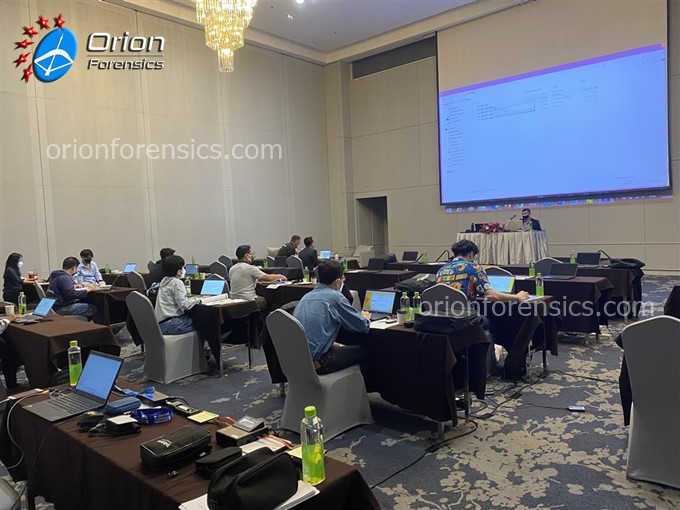

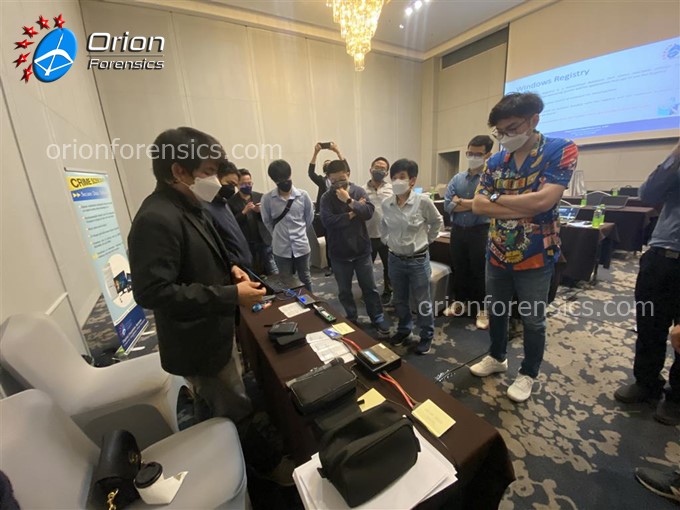

Day1 (Online Class ,Participants 26 Person) and Day 2 (In-House Class, Participants 15 Person).
All Course Training CLICK
Read More
Corporate Fraud and Covid-19
Fraud is an intentional act to deprive another of property or money by guile, deception, or other unfair means. Corporate fraud is fraud against a company and can be committed by internal or external parties. Internal fraud is when an employee, manager, or owner commits fraud against their own company such as theft or misuse of company assets. External fraud is committed by third-parties and includes bribery, corruption, hacking, theft and insurance, loans and payment frauds.
It is estimated that organizations globally lose 5 percent of gross revenue to fraud.
A general understanding of human nature and crime may lead us to believe that corporate fraud is committed by employees with bad intentions and a faulty moral compass. However, fraud experts, after analyzing thousands of cases of corporate fraud, have found that other factors are more important in leading an employee to commit fraud.
These factors are illustrated in the Fraud Triangle. The Fraud Triangle consists of Opportunity, Pressure, and Rationalization. To take a simple example – The petty cash draw in Jack’s company is never locked, is not monitored, and is never reconciled. He has an Opportunity. He is low on cash, it is his girlfriend’s birthday and he has not bought a present yet. He has Pressure. A few hundred dollars will not harm the company, nobody will find out, he is underpaid, and overworked and his boss is an idiot. He now has Rationalization and all three boxes are ticked for Jack to become a corporate fraudster, despite being a generally ethical and well-intentioned employee.
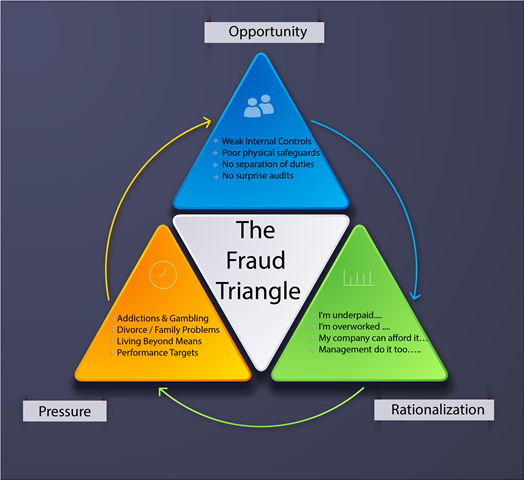
How can the Fraud Triangle help us understand the threat of fraud during the Covid-19 pandemic?
Opportunities – while working from home, many companies have had to quickly introduce new work-processes with fewer controls. Pressure – we all know the pressure faced by many during the pandemic due to uncertainties, reduced salaries, family crises and general anxiety levels. Rationalization – while working from home, employees may feel less connected to their employer and colleagues or they may feel dissatisfaction with their employer for measures taken during the pandemic, such as salary reductions or redundancies, making it easier for them to justify committing fraud.
The Association of Fraud Examiners (ACFE) – the world’s largest anti-fraud organization and provider of anti-fraud training and education (and the source of most of the statistics presented in this article) – has observed a significant increase in fraud as a result of Covid-19. Especially in employee embezzlement, cyber fraud, payment fraud and identity theft caused by less oversight due to remote workforces. ACFE members also report challenges to investigating fraud due to travel restrictions and other lack of access to evidence.
While Covid-19 may have created new opportunities and different kinds of fraud, the fundamentals of fraud and how companies can protect themselves from fraud remain the same. The following are some of the key tools available to companies to reduce the risk of being victims of fraud –
- Hotlines – 43 percent of frauds are detected through tips. Organizations with hotlines detect fraud sooner and limit their losses. This illustrates the importance of having a clear reporting mechanism for employees, suppliers, and others to report suspicions of fraud. Most fraudsters are not saving for a rainy day – they tend to live beyond their means and colleagues may pick up on this and report their suspicions. Other red flags of fraud include financial difficulties, unusually close relationships with vendors/customers and addictions.
- Fraud Awareness Training – Employees are more likely to provide tips after they have received training on fraud. They are also less likely to commit fraud if they are aware of the company’s code of conduct and anti-fraud policies and internal controls. Topics will include red flags of fraud, types of fraud, and fraud reporting processes.
- Tone at the Top – Many factors in the Rationalization of a fraud involve poor management. Management and owners must set an example in terms of ethical behaviour and fair treatment of employees and vendors.
- Incident Response Plans – Companies should have a plan in place for how they will respond to fraud or allegations of fraud. This may include identifying external resources that can be called upon to support investigations and legal actions. Once fraud is detected, it is important to collect evidence in a forensically sound manner so it can be used in legal proceedings if necessary. Evidence should also be carefully reviewed before deciding whether legal action can be taken against the fraudsters. Companies often rush to confront a fraudster before sufficient evidence has been gathered to strengthen the company’s position.
- Internal Controls – Most companies will not have the open Petty Cash drawer that helped corrupt poor Jack, but many have comparable vulnerabilities that employees will become aware of over time. Having tighter internal controls including separation of duties, physical safeguards, and surprise audits will reduce the Opportunity factors in the fraud triangle. Many external auditors will also provide internal control review services.
- Fraud Risk Assessments – This involves proactively identifying and mitigating the company’s vulnerabilities to internal and external fraud. It can be done internally or with the support of outside consultants.
- External Audits – External audits of financial statements are also a significant source of fraud discoveries, especially in larger organizations. Identifying potential frauds should be included in the scope of engagement with external auditors.
- Pre-Employment Screening – These include checking of past employment duties, criminal and background checks, educational verification, and reference checks. Organizations should ensure that their employment screening processes comply with data protection laws, with no unauthorized accessing of applicants’ data, and consider the use of a professional screening company.
As the saying goes, prevention is better than cure. Implementing these anti-fraud tools will reduce the risk of your organization becoming a victim of fraud. It will also ensure that, if you do become a victim of fraud, the response will be swift and appropriate, and the damage will be limited.
Author : Peter Holmshaw – Managing Director at Orion Investigation Co.,Ltd.
Read More